7 Reasons

Tag: wings

  • Guest Post: 7 Reasons You Need Bird Proofing

    Guest Post: 7 Reasons You Need Bird Proofing

    Pigeons. Seagulls. Rooks. Seagulls. There are many species of birds that cause a real nuisance – from squawks and screeches these birds create an awful amount of mess, ruin roofs and can be incredibly aggressive too. To deal with these pesky pests you may need to invest in a bit of bird proofing. Here’s seven reasons why.

    7 Reasons You Need Bird Proofing
    The flock gathered to watch their next victim

    1.  Pigeons Are Rats With Wings. Let’s face it, no-one loves pigeons. Especially city-dwelling pigeons. They multiply at an amazing rate, they get into roof spaces when roosting and structurally damage buildings with their copious amounts of mess. Throw in the feathers they leave behind everywhere and

    2.  Rooks Are Noisy. If you live in the country, you’ll know all about rooks. They are very sociable birds and form nests high in treetops and they can number hundreds, if not thousands at a time – as such the noise is terrible! From as early as 4am these birds can cause a real racket – if you’re a country retreat or hotel you’ll know about it from the amount of complaints you’ll get!

    3.  Seagulls Are Aggressive. Oh I don’t like to be beside the seaside! Ever been for a nice walk on the beach or pier and had your fish and chip lunch ruined by aggressive seagulls? They cause a real headache for seaside businesses through their mess – and they can be pretty scary too! They are very territorial birds – get near their nest and you’ll know about it. Plus they can spread salmonella. Yuck.

    4.  Starlings Anger Gardeners. If you’ve got green fingers, the starling is your main enemy. These birds eat grubs, grains and seeds and will happily chomp away at your green shoots. Plus if that wasn’t bad enough their droppings can cause real problems – they carry a fungal respiratory disease that grows in soil, so if you’re growing fruit and veg you can really make your family ill.

    5.  Canada Geese Scare Pilots. Canada Geese are not only noisy, opportunistic feeders, they flock together. If you’re a pilot – you are scared of these birds. They flock together and if they get sucked into a plane’s jet engine…well the consequences are unthinkable.

    6.  Bird Proofing Isn’t Expensive. Believe it or not, bird proofing solutions aren’t expensive. They can range from putting up simple bird netting and bird spikes, to things like electrical deterrents and wire deterrent systems. Contact your local pest control company who will often carry out a free survey to see what you need!

    7.  Hawking Is Cool. We’re going to say it – hawking is cool. It’s probably the most expensive bird control solution, but it pits nature against nature. Hawks convince gulls and pigeons that there is a real threat in their nesting area, which makes those pesky birds scarper. Watching these beautiful birds fly up and scare away pigeons and gulls is a sight to behold.

    So there you have it. Seven simple reasons you need bird proofing if you’ve got problem birds. For more information, check out www.nbcbirdandpest.co.uk.

  • 7 Reasons to Hate Pigeons

    7 Reasons to Hate Pigeons

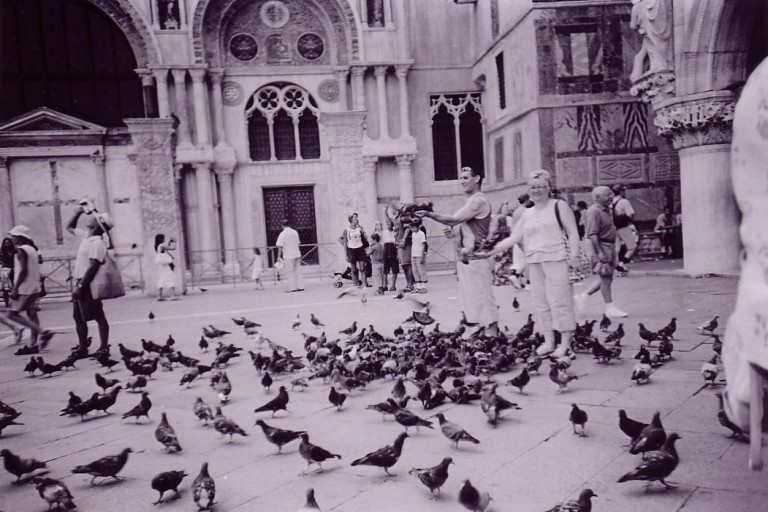
    A black and white lomograph of pigeons eating in Venice

    1.  Impudence. Pigeons poo on statues.  This is disrespectful.  They poo on Churchill, they poo on Nelson, they poo on Eros.  Pigeons poo on all of the nice statues of people and gods that we like.  Pigeons don’t poo on statues of Michael Winner or Margaret Thatcher.  This may be because we don’t have any, but if we did, pigeons probably wouldn’t poo on them, because pigeons are horrid and annoying.

    2.  Freeloading. We regularly hear stories (some of us have even witnessed this) of pigeons using London Underground trains to get across London.  Do they pay for this?  No.  These sponging vermin are using our transport system at our expense.  They didn’t help build it and they don’t contribute anything to its maintenance or running costs.  I have to carry an Oyster Card, so should they.  Let’s staple Oyster Cards to them.

    3.  Imagery. Pigeons are oft described as “winged rats.”  That’s “rats,” terrifying pointy-faced, sharp-toothed creatures.  That’s “winged,” which is one of the scariest words in the English language when pronounced as a word of two syllables, “wing-ed.”  “Wing-ed rats.”  It makes me shudder.

    A black and white lomograph of a flock of pigeons in the Piazza San Marco, Venice

    4.  Idiots. Pigeons attract idiots.  Look at this American woman in the Piazza San Marco, Venice.  She’s in one of the most beautiful parts of one of the world’s loveliest cities and she’s fascinated by the pigeons.  She’s clearly an idiot.  She could be looking at the Basilica, she could be looking at the Doge’s Palace, she could be looking at the Procuratie Vecchie but no, she’s looking at pigeons.  Stupid, stupid, stupid, stupid, stupid, stupid, stupid bloody pigeon-woman.

    5.  War. Pigeon excrement was the only known source of saltpetre (potassium nitrate) in 16th century England.  Saltpetre is an essential ingredient in gunpowder, so if your Tudor house was damaged by canon-balls or if your copotain hat was knocked from your head by musket-shot five-hundred years ago, you can blame pigeons.

    6.  Emasculation. Wood pigeons are the larger, nobler cousins of the urban pigeon.  Historically these creatures, with their quite pleasant and distinctive call, have been content to live in trees far away from people (who do not live in trees).  Recently though, a pair of these creatures have moved in near to a house belonging to a friend of mine.  Their favourite game is to poo on the love of his life (his shiny, expensive German car) and then to sit on his garden fence cooing at him.  They do this every day.  Not unnaturally, this makes him very cross.  If he could get hold of them, he would probably tear their heads off in a murderous rage, but every time he approaches, they casually retreat to a safe distance and continue taunting him.  It is because of this that he is now known as The Pigeons’ Bitch.  And because of me, obviously.  He should never have told me.

    7.  Profiteering. The use of a fleet of trained carrier pigeons was instrumental in the allowing the Rothschild banking family to make vast fortunes during the Napoleonic wars.   They were able to manipulate financial markets for their own gain, based on having exclusive access to early information about the results of battles.  Pigeons filled the bankers’ wallet (the Reverend Spooner himself would have been proud of that one, and astonished by the mental image).