7 Reasons

Tag: seven reasons

  • 7 Reasons That This Sign Could Be Better

    7 Reasons That This Sign Could Be Better

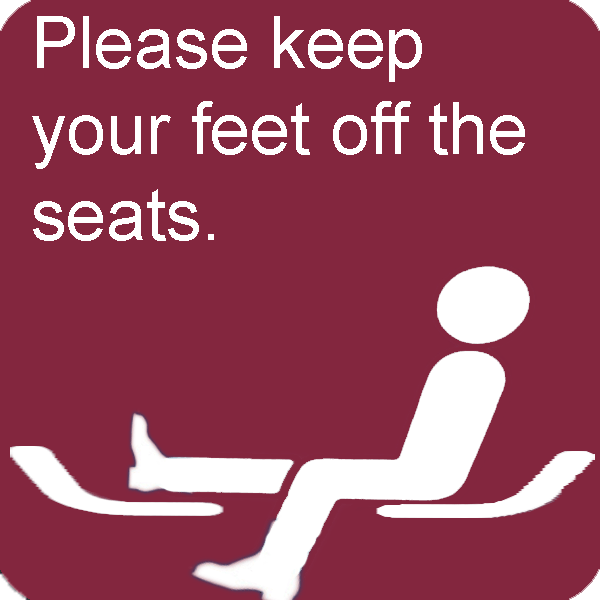
    A first Capital Connect sign urging passengers to keep their feet off seats

    1.  What’s Missing? I saw this sign on a First Capital Connect train yesterday.  What do you notice about it?  Or, more specifically, what do you notice about the person depicted on the sign?  That’s right, First Capital Connect, you have a sign asking people without feet to keep their feet off the seats.  You might as well have put this sign up.

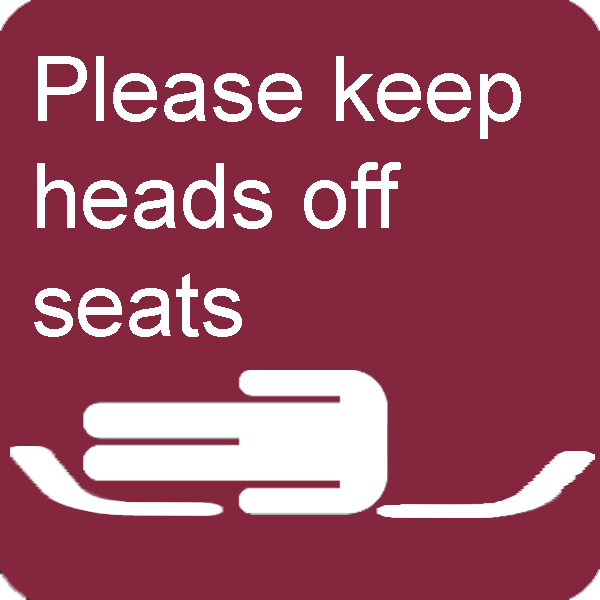
    a sign exhorting rail passengers to keep their heads off seats

    2.  It’s Not Very Interesting. But if you’re going to ask people to keep something that they don’t have off seats, then feet don’t really have enough appeal.  Football has mass-market appeal and advertisers often use it to get their message across.  How about this?

    a sign exhorting Emile Heskey to keep his goals off the seats

    3.  Some People Don’t Like Football Though. So you can always try a more fanciful approach.

    a sign exhorting rail passengers to keep their unicorns off seats

    4.  Your. Given that the person depicted has no feet you, rightly, don’t use the word your, as you aren’t asking them to keep their feet off the seats; you’re asking them to keep feet in general off the seats, presumably in case any footless passengers travelling on your train are carrying bags of feet, which are probably quite heavy and burdensome.  In which case, this sign would be better.  This sign would also let people know that putting bags containing items other than feet on seats is also unacceptable, thus serving a practical dual purpose.

    a sign exhorting rail passengers to keep their luggage off seats

    5.  Targetting. It’s not clear which footless demographic the sign is aimed at.  After all, if these footless people are old enough to travel by train, but are still so ignorant that they need to be told not to put their feet on the seats, then the chances are that they won’t know why it is wrong.  This sign spells out the consequences to them.

    Please Refrain From Placing Your Feet On The Seats, As It Is Discourteous To Other Passengers And May Lead To Contemptuous Looks From Them, And A Stern Rebuke From The Train Manager

    6.  Or Be Less Subtle. Or you can try the putting the fear of god into them by letting them know that if they put their feet on the seats then they will be shot by a man without a lower-body.  That should get their attention.  Can you implement a foot response unit?

    A sign exhorting rail passengers to keep their feet off seats

    7.  Feet. Or you could just have thought about what you were doing in the first place and engaged someone competent to do your signage.  I’d like to tell you that your stupid sign ruined my journey, but it didn’t.  The late-running of the train did that.

    a sign exhorting rail passengers to keep their feet off the seats

  • Guest Post:7 Reasons That Travelling By Sleeper Is Great

    Guest Post:7 Reasons That Travelling By Sleeper Is Great

    In the final instalment of 7 Reasons Transport Week, regular guest poster Simon Best, brings a touch of old school glamour to proceedings by travelling on a sleeper train.


    1 Novelty. Part of the fun of travelling by sleeper is its novelty. There are only four sleeper services in the whole of the United Kingdom, but it wouldn’t be as much fun if you did it every day. Just imagine if your daily commute involved getting a sleeper to and from work (and no falling asleep on the train from Luton to St Pancras doesn’t count). If this was the case you would, essentially, be living on a train. Now I can think of worse places to live – France, for example or Slough – but that’s irrelevant, the main point is…

    2. History. Boarding a sleeper is a bit like stepping back in time; even the name sounds like something from a 1930s Agatha Christie novel and it put me in mind of WH Auden’s poem ‘The Night Mail’, with its talk of cheques and postal orders (and that even rarer object the letter). I personally haven’t received or written a cheque all year and I think the last postal order was sent in about 1973. There is no longer a night mail train; now your Amazon orders or the clock you bought on Ebay are delivered by plane. The sleeper is still running. Travelling by sleeper is great because it is historic.

    3. VIP Treatment. Normally catching a train is a stressful business. You have to wait on the concourse until the platform is announced – usually two minutes before you’re due to leave – and then it’s changed two minutes after you should have left causing you to either: a) miss the train b) knock an old lady over with your briefcase or c) strain a muscle hurling your suitcase into your carriage. This is not the case with the sleeper. It is always in the station an hour before it is due to leave. You’re greeted by your sleeping car attendant, welcomed by name when you show your ticket (you don’t get that on the 7:42 to Charing Cross do you?), you’re asked what you’d like for breakfast,  when you’d like it, and shown to your cabin. In short, you’re treated like Michael Winner being escorted to the first class cabin on Concorde. Travelling by sleeper is great because you’re given VIP treatment.

    4. Your Cabin. Once on board you make your way to your cabin, stow your luggage (there is no other train in the world on which you ‘stow’ your luggage you just stick it in a luggage rack and hope someone doesn’t put a huge suitcase on the top). You then proceed to play with all the gadgets, play around with the bed, open the little shelf next to the bunk, climb up to the top bunk and sit there, lift the cover to the wash basin, press the taps, open the blind, and close it again. Twice. Turn the three different lights on and off several times and adjust the temperature slider seeing just how hot or cold you can make it and like the controls on a shower then spend ten minutes getting it just right, which is invariably the setting it was on to start with. Travelling by sleeper is great because your cabin has more gadgets than the TARDIS.

    5. The Lounge Car. Once you’ve become bored fiddling with the temperature and switching the light on and off, you’ll doubtless leave your cabin and stroll down the train to the lounge car. Here you can relax on a sofa and order a gin and tonic from the bar (well that’s what I’m having, what would you like to drink?). The lounge car even stays open all night but you can only get booze until one am because, as the stewardess said, “this is a train, nae a nightclub” (who would want a nightclub on wheels anyway). On American sleeper trains lounge cars even have observation decks, with clear roofs so that you can look out at the scenery as you travel along. They also go one stage further and provide actual in-train entertainment, showing films. I was once stuck on a non-moving train in the middle of the desert in Texas. When we’d been staring at the desert for three hours I got quite excited at the announcement that they were showing a film. They showed My Dog Skip. I should have kept staring at the desert. However the actual film is irrelevant. Travelling by sleeper is great because there is a lounge car.

    6. Breakfast. Having chosen your morning beverage, ordered your breakfast and arranged your wake-up call when you board the train, you’re gently roused by the sleeping car attendant at the appointed time, with your breakfast which you can then eat in bed while the train rolls sedately through the countryside. Just be careful not to flash your nightwear at a flock of sheep. I love having breakfast in bed, except for the crumbs that you have to clear up afterwards. Travelling by sleeper is great because you get breakfast in bed with a view, and you don’t have to clear up afterwards.

    7. Efficiency. We all like things that save us time. Think of all the labour saving devices we have in our homes: washing machines, computers, vacuum cleaners, electric carving knives (actually forget that last one). The sleeper allows you to go to bed in London and wake up next to Ben Nevis (or if you’re feeling more adventurous go to bed in Berlin and wake up in Warsaw). This makes it one of the most efficient modes of transport, as it allows you to travel a long distance and sleep at the same time. Something that is not advised if you’re driving a car or riding a bike.

  • 7 Reasons Not To Write On The Train

    7 Reasons Not To Write On The Train

    As a part of 7 Reasons Travel Week, we have decided to try something new.  Rather than writing this piece in a conventional location; a quiet atmosphere of consideration and reflection – or in the pub – it’s going to be written on the train during a journey from York to Kings Cross.  We like to think of it as a bold experiment into guerrilla style blogging, because that sounds more interesting than a man typing on a train.  Anyway, the guard has blown his whistle (or I’m having another acid house flashback) and we’re off.  Here are seven reasons not to write on the train.

    Space…The Lack Of

    1.  It’s Tight. No, not my prose style, my deadline – or even my trousers – I’m referring to the amount of room that I have at the moment.  I’m 6’2”.  The tiny seat that I am crammed into has sufficient legroom for an eight year old child (a small one).  My back is planted firmly into the back of my seat and my knees are jammed right up against the hard back of the seat in front of me, just under the “table”.  I’ve only been seated for ten minutes and I’m already in pain. Balanced on the teeny-weeny-tiny “table” in front of me is my very small netbook, a bottle of water, a pen, a notebook with a picture of a skateboarder on it (how cool am I?) and a pair of sunglasses.  The sunglasses aren’t meant to be on the “table”, they just keep being shaken from their resting place on top of my head.  They – for some reason – always land on the f key.  Anyway, ocular accoutrements aside, it is all essential writing gear on the “table” (well, I say on the “table”, I keep having to retrieve a lot of it from the floor).  This is because of…

    2.  The Shaking. The shaking of the train is making typing difficult, to say the least.  It causes me to accidentally touch the trackpad quite a lot, which makes the text I am typing suddenly begin to appear in the middle of a line I don’t want it to be on.  So if what you’re reading seems somewhat confused and incoherent, it’s because of the shaking and not, as is usually the case, because I’m confused and incoherent.  Jfmklsdjlggfkgnfk;gnf.g   (My apologies, that was my bottle of water leaping from the table and landing on the keyboard.  That happens quite frequently).

    My webcam captures the moment the flying bottle makes another guest appearance

    3.  The Mysterious Burning Smell. Oh yes, we have one of those.  It smells like an electrical fire.  I first noticed it shortly before the train ground to a halt in the middle of the countryside near Leeds.  Am I about to die in an inferno?  Where is the nearest door?  Why don’t the hammers next to the windows resemble hammers?  Is that a field full of cows that we’ll have to escape into?  Why didn’t I finish that packet of Hob-Nobs before we left the house?  I’m beginning to realise that my imminent death isn’t conducive to concentration.

    4.  The “WiFi”. The East Coast Mainline WiFi network is slower than the train itself.  In fact, it’s slower than me alighting from the train, going to the pub for a bit, growing a beard, taking a course in both basic and advanced basket-weaving, and then walking to Google’s office in California to get a printout of the web page that I now wish to view.  I keep checking back every five minutes or so, to see if my web page has loaded but no, it hasn’t.  And I may need to read that page on how to avoid being eaten by a cow as a matter of some urgency.

    5.  The Woman Next To Me. The woman sitting next to me, despite being approximately a foot shorter than I am, keeps complaining about the lack of legroom.  She also keeps staring at my screen, which is very off-putting.   She continually encroaches into my armrest territory, and when the train jars or shakes, her pointy elbow digs into my left arm and my ribs.  It serves me right for marrying a woman with sharp elbows, I suppose.    The woman next to me is now pulling a face.

    6.  Announcements. I’m being annoyed by the PA system and it’s causing me to become distracted and lurch into epistolary instead of writing properly.

    Dear PA System,

    I have heard the announcements now, and I understand them, thank you.  I couldn’t be more aware of the location of the buffet car, the name of the train manager, or the myriad ticket restrictions that apply to my journey.  I have now decided, as a consequence of the many announcements I have heard, that I will be taking my personal belongings with me when I leave the train.  Obviously, without your help, I would have abandoned all of my stuff and wandered off the train naked to begin a new life unencumbered by material possessions and socks.  Thank you very much for sparing me from this alternate and possibly quite chilly future. Yours sincerely,

    Passenger 12 (facing).  Coach C.

    7.  The Time. We’ve been on the train for two hours and we’re arriving at King’s Cross already.  That’s not enough time to write anything.  Where’s my delay?   Bastards!

  • 7 Reasons That Urban Cycling Is Tricky

    7 Reasons That Urban Cycling Is Tricky

    Cycling in an urban environment is not always an unmitigated joy, mostly due to people.  In fact, it can often be downright terrifying, frustrating and occasionally embarrassing.  Here’s why (with pictures):

    1.  Pedestrians.  The moment that they sense the road is free of motor vehicles, pedestrians will swarm onto it from all directions without looking.  There is no discernible pattern to their movement, which is wholly impossible to predict.  If you have a bell fitted to your bicycle, you can sound this as you approach.  This won’t cause pedestrians to move out of your way, but they will at least look at you as you plough into them.  The movement of pedestrians in cycle lanes is easier to predict.  They won’t move out of the way at all, as they are apparently mesmerised by all of the pretty pictures of bicycles they can see there.

    2.  Pedals. No serious cyclist uses standard pedals and you’ll find that anyone with a remote interest in cycling is attached to their pedals, either by clips, or using a clip-less system.  This is lovely for generating a lot of power, but an absolute nightmare when maneuvering in dense traffic, where cyclists often need to put their feet down.  This is why you often find the riders of cooler, more expensive bikes laying in the road at traffic lights, having come to a standstill and forgotten to extricate themselves from their pedals, which causes them to fall over (it always seems to happen in slow-motion).  Well, either they’ve forgotten, or they’ve had some sort of equipment malfunction.  In my experience, the larger the audience, the more likely you are to have that malfunction.

    3.  Distraction. There are many distractions that endanger the urban cyclist: girls in summer clothing, other bicycles, local landmarks and, as I discovered on Monday, shop windows.  So distracted was I by my own reflection in a window that I cruised slowly into the back of a car which had come to a halt in front of me, causing many people on a bus to laugh.  It was very undignified.

    4.  Temptation. There are many temptations in an urban environment and it’s easy to succumb to them.  While no one would dream of having a few beers and getting behind the wheel of a car, it is perfectly acceptable to have a few beers and then push your bicycle home.  But pushing your bicycle is boring and dull and, when you find yourself alone, away from traffic and pedestrians on a deserted riverside cycle path, for example, it’s tempting to ride for a bit.  This is a mistake, as you will soon realise when you find yourself wobbling outrageously and unable to steer in the direction that you are vaguely aware that you should be heading in.  You will feel a growing sense of anxiety as you lurch between heading toward the river, and heading ever-so-slightly less toward the river.  In your efforts to avoid the river, you may find that actually ride round in circles.  A dry crash counts as a win in this situation.

    5.  Cars. Cars are the major hazard to urban cyclists, chiefly because there are so many of them.  They do many, many stupid things, but perhaps the most irritating thing they do is to straddle the cycle lane while waiting to pull out, thus halting all cyclists who could otherwise have continued along the road.  Having pedalled hard to build up momentum only to be halted due to inconsiderate behaviour is infuriating.  As you approach them, all of your shouting, waving and bell-ringing will be in vain as the driver will never, ever make eye contact with you, and they certainly aren’t going to back out of the way.  Many cyclists kick the cars of these idiots as they make their way around them.  If I attempted that, I would probably fall off (see reason 2).

    6.  Buses. Terrifying behemoths of the urban environment, buses strike fear into the heart of cyclists.  They pull out without any warning and, despite being slower than most bicycles on tight, twisty roads, they will always try to overtake anyway.  If you want to see what the face of a terrified and angry cyclist looks like when squashed up against a window, you should sit in a seat on the left hand side of a bus, somewhere near the centre.

    7.  Taxis. The bette noir of the urban cyclist, the pedestrian, other road users; in fact, all right thinking people.  Trying to avoid taxis in an urban environment is challenging indeed.  They’re apparently exempt from all of the laws of the road and can seemingly park anywhere, travel at any speed, in any direction, are not obliged to signal and their drivers don’t even need two hands on the wheel.  Or even one.   Who knows where a taxi will turn up next, or in which direction it may be travelling?  Your bike could be struck by a taxi at any moment, even if it’s on the roof-rack of your car or stored in your garden shed.  The bloody things pop-up everywhere.  They’re a menace.

    So, in conclusion, urban cycling is dangerous beyond belief, mostly because all road users – drivers, cyclists and pedestrians alike – are idiots.  In fact, all people are idiots, and the further you are from them, the safer you will be.  Unless you’re a taxi driver of course, in which case you’re probably immortal.

  • 7 Reasons The Sinclair C5 Was Destined To Fail

    7 Reasons The Sinclair C5 Was Destined To Fail

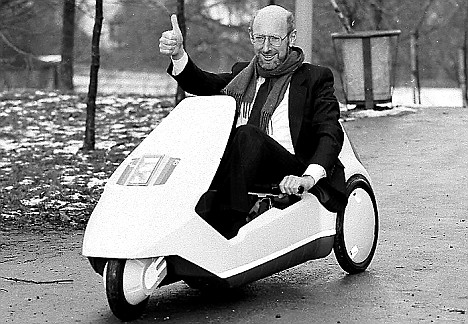
    The Sinclair C5 was relentlessly ridiculed. And quite rightly so, it was rubbish. Any Industrial Design & Technology graduate/person will tell you that. But if they had just made a few small changes, it could have sold at least 500 more units.

    Sinclair C5

    1.  Women. Quite why Sir Clive Sinclair thought his bucket-on-wheels was going to appeal to a market that needs to check make-up upon arrival at destination, is anyone’s guess. But he did. And he was wrong. If only he had doubled one of the wheels up as a mirror. Sure, it may have looked a bit ‘bling’, but it would probably have appealed to the ever growing pimping community.

    2.  Date. Unfortunately for Sir Clive, he decided to launch the Sinclair C5 on 10th January 1985. It just so happened that the Viennese zither player, Anton Karas, passed away that day. And as we all know, a zither is much more powerful than a Sinclair C5. The 11th January 1985 was a very slow news day. If only Clive had waited 24 hours.

    3.  Hills. Always a bit annoying having to get out of your vehicle and push it up a hill isn’t it? Which is why the Sinclair C5 should have come with a tow rope. Or a map that just showed hills that went down.

    4.  Stirling Job. Getting Sir Stirling Moss to promote the Sinclair C5 may have seemed like a stroke of genius, but they really should have prepped him first. “Just treat it as if you are riding a bicycle,” probably wasn’t quite the ringing endorsement Clive was after.

    5.  Washing Machines Live Longer With Sinclair. There is an urban myth that says the Sinclair C5 was powered by a washing machine motor. It’s a myth because although the motor manufacturers, Polymotor, do supply to the washing machine industry, they also manufacture torpedo motors. Unfortunately, it is true that the body work of the Sinclair C5 was manufactured by Hoover. Clive should have waited for Dyson. Then maybe I wouldn’t be trying to think of witicisms that involve ‘Sinclair C5’ and ‘cleaning up’.

    6.  Britain. Sir Clive’s biggest mistake was probably that he tried to sell the Sinclair C5 in Britain. Not only did Britain already have things called cars, it also had weather. And sadly it was never very good. If Sir Clive had been any good at geography, he would have realised that the Sahara desert would be a much better place for his bits of plastic. If it had come with a spade too, the owners could have made sandcastles.

    7.  Elephants. There is a joke about elephants and minis that I have never really understood. It goes something like this. Q: How many elephants can you fit in a Mini? A: Four. Two in the front, two in the back. Hilarious it may not be, but it does at least make you think of four elephants. In a Mini. Now that’s a terrific endorsement for both Minis and elephant dieting tips if ever I have heard one. So now let’s try it with the Sinclair C5. Q: How many elephants can you fit in a Sinclair C5? A:

    Elephant sits on Sinclair C5

  • 7 Reasons That I Shouldn’t Have Got The Bus

    7 Reasons That I Shouldn’t Have Got The Bus

    I used to travel by bus a lot when I was younger.  But now I don’t need to use one, as there are always better alternatives available to me.  Last Saturday, however, I had to make a journey for which a bus seemed like the best option.  I know now that it wasn’t.
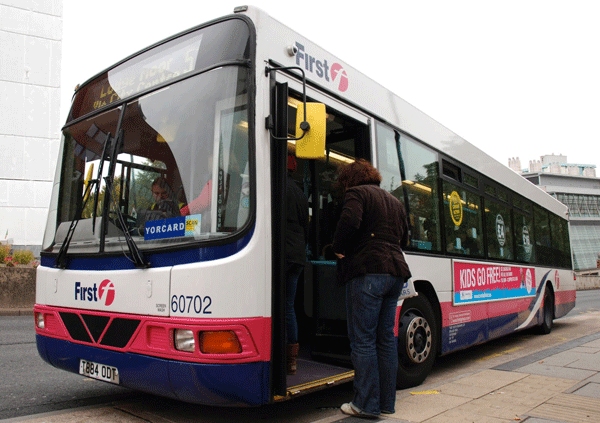
    A First York single-decker bus with passengers boarding it.

    1.  The Women. I realised quite soon into my ride on the bus (occupied by about thirty people) that I was the only man there.  When Margaret Thatcher said, “A man who, beyond the age of 26, finds himself on a bus can count himself as a failure,” did she scare all of the other men away?  Obviously I disagree with her statement; there are many good reasons for men over twenty-six to be on the bus, probably seven.  That doesn’t mean that I disagree with everything Thatcher said, of course.  She once stepped out of 10 Downing Street, strode up to a microphone and said “Good evening” to the assembled journalists, and I didn’t find that too objectionable.  But I’m at a loss as to why the bus was an otherwise-man-free-zone, and it felt strange to be intruding on whatever it was that the sisters-of-the-bus would otherwise have been doing.

    2.  The Heat. It was a hot, sunny day, and buses are vehicles that are constructed almost entirely from windows.  Unlike just about every other public building or vehicle though, there is no air-conditioning.  This meant that the bus was a very hot place indeed.  It is said that men sweat, but women perspire, and I discovered that this was true while I was on the bus:  I sweated, and the women on the bus perspired.  A lot.  They perspired so much that the interior of the bus developed its own tropical microclimate and all of the windows steamed up, which actually improved the view of some of the suburbs we passed through.

    3.  The Baby.  There was a screaming baby on the bus.  She bawled persistently for the entirety of the journey.  She cried so loudly that I began to wish I had more earwax.  Not that I could blame the baby for her wailing, of course.  I daresay I’d have cried too, if my mother had looked like Brian Blessed and worn pink velour leggings that were six sizes too small.

    4.  The Girls. The bus seemed to be the place where the city’s mardy-faced fifteen year old girls go to hang out in pairs.  They were wearing most of Superdrug’s range of make-up simultaneously and all of them had hair so dazzlingly shiny that it hurt my eyes.  When not scowling contemptuously at me, the baby, Brian Blessed, the strange old woman or the driver (as we were clearly idiots), they were engaged in weighty conversations of substance with each other:

    “D’ya know that Kerry?”

    “No” (said as a long word, pronounced nerrrrrr).

    “She finished with that Ryan”.

    “Who?” (pronounced ooo, and said like a gorilla)

    “The one what lives next to Judy” (pronounced Ju-deh)

    “Who’s Judy ?” (oooze Ju-deh)

    At this point, mardy-faced-girl number nine scowled at her friend, mardy-faced-girl number ten, who was clearly an idiot for not knowing who Ryan or Judy were, and I inserted my fingers into my ears and began to hum The Marseillaise.

    5.  The Strange Old Woman. There was an old woman at the front of the bus, in a priority seat.  She had many bags surrounding her – two of which were tartan – and, from one of those tartan bags, she produced an unappetising looking sandwich which appeared to contain some sort of luncheon meat.  She proceeded to eat the sandwich.  Now you may be thinking that this isn’t really strange behaviour, but I alighted from the bus when it arrived at my destination and, when I got back on board (lighted?) several hours later, she was still there.  Shortly after I sat down she reached into the other tartan bag and produced a slice of fruitcake, which was presumably her dessert.  She’s probably still there now, having coffee and mints.

    6.  The Speed. I wasn’t on the bus because I wanted to get to my destination in a hurry, which is just as well, as the bus was moving at almost glacial speed.  In fact, there was only one thing on the narrow road back to the city centre that was slower than the bus; and that was the enormous fat man wobbling along in the centre of the carriageway on a tiny bicycle.  His legs were rotating at 11 revolutions per minute.  I know this, because I had time to calculate it.  We were stuck behind him for 19.4 renditions of The Marseillaise until, eventually, we ground to a complete halt.

    7.  The Prisoner. By this point, I’d tired of the bus and, when we had been stationary in traffic for several minutes, I decided to get off and walk.  “Can you open the doors please, I want to alight” I said to the driver, taking full advantage of the rare opportunity to use the word alight.

    “No.  Sorry.”

    “But we’re not moving.  I wish to return home during my cat’s lifetime.”

    “No.  Sorry.  We’re not at a stop.”

    “But we are at a standstill, will that do?”

    “No.  Sorry.”

    “We’re stationary and next to the kerb:  A situation that isn’t remotely different to being at a bus stop.  Not that I’m an expert on bus stops, but one of the things that I have observed about them is that they involve both a stationary bus, and a kerb; and our present circumstances fulfil both of those criteria.  Furthermore, I put it to you that…”

    At this moment the doors opened and I was free to alight from the bus, never to return.  Twenty mardy-faced girls scowled at me as I got off.

    7 Reasons Transport Week continues tomorrow.

  • 7 Reasons I Failed My Driving Test

    7 Reasons I Failed My Driving Test

    In the year 2000, I took my driving test. Twice. I failed. Twice. When people asked what I did wrong, I said I drove out in front of another car at a roundabout and drove too close to a parked car. In truth though, it was worse. Much worse.

    1. As far as I am concerned, if a sign tells me to undertake all red cars I will do so. Even if it means chasing the git all the way to Bradford.

    7 Reasons I Failed My Driving Test

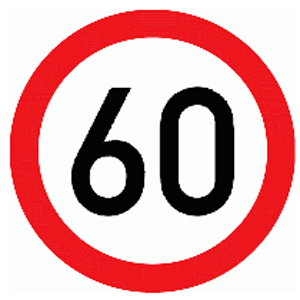
    2. I am not sure what my test instructor was more perturbed by, the fact that I refused to go along this road or because I told her, ‘Sorry love, you must be over 60. Can’t take you down here.’

    7 Reasons Driving Tests Are Difficult

    3. It’s not my fault it looks like a bottle.

    7 Reasons I Failed My Driving Test

    4. I am not sure whether it was me trying to forcefully remove her bra or just the sight of me wearing it that got to my instructor, but either way she put an X on her bit of paper.

    7 Reasons I Failed My Driving Test

    5. How was I supposed to know this didn’t mean, ‘wield your iron age mallet at all other drivers’?

    7 Reasons I Failed My Driving Test

    6. In my defence, it had been a long time since I had played with my wooden dagger.

    7 Reasons I Failed My Driving Test

    7.  I rather suspect if I hadn’t taken Viagra that morning I would have got away with this one. As it was, I couldn’t see where I was going.

    7 Reasons I Failed My Driving Test

  • Russian Roulette Sunday: In Case of Bear

    Russian Roulette Sunday: In Case of Bear

    The Russian Roulette Sunday LogoIt occurred to us that, although we’ve shown you how not to deal with a bear in the past, we’ve never shown you how to deal with a bear.   Until now…

  • 7 Reasons That We Should Grow Vegetables In Our Lungs

    7 Reasons That We Should Grow Vegetables In Our Lungs

    If you haven’t been near a news source for the past couple of days, you’re probably looking at the title and thinking “er…what!”, or something similar.  So, in case you missed it yesterday, the BBC website – amongst many others – carried this amazing news: A pea plant grew in a man’s lung.  He didn’t grow it deliberately, and doctors (killjoys) removed it while it was still quite small.  But this story demonstrates that it is possible to grow vegetables in our lungs.  I’ve given it some thought, and it’s actually a good idea.  Here are seven reasons why.

    An X-Ray of the human lungs showing the lungs, the heart and the asparagus

    1.  You Will Always Have Food With You.  There’ll be no more worrying about where your next meal is coming from, and you’ll also lessen the likelihood that you’ll snack on food that is bad for you.  After all, you’ll be growing fresh, healthy vegetables in your lungs, and you’ll be eating that instead of snacking on late-night-pizza.  So you’ll be healthier too.

    2.  Oxygen. Plants are amongst Earth’s major sources of oxygen.  Where better then, to house an oxygen-making plant, than in your own lungs.  You’ll be able to get some of your oxygen directly, without breathing as much.  Maybe you’ll be able to hold your breath for a long time.  Perhaps you’ll be able to swim underwater for longer distances.  David Walliams will probably attempt to swim the English Channel underwater and David Blaine will be able to stage ever-more-spectacular death-defying stunts, which will continue to confound and irritate all right-thinking members of humanity.

    And now that I’ve accidentally mentioned David Blaine, I feel obliged to say this.  David, you are thirty-seven years old.  The world’s oldest living person is 114 years old.  So you aren’t even a third of a way toward equalling her death-defying accomplishments; shut up and stop showing off.

    3.  Vegetarians. In cases where planes have crashed in remote locations and people have become stranded for long periods of time without a food source, vegetarians fare badly.  When their omnivorous companions’ minds turn to cannibalism, their thoughts do not.  If we grow vegetables in our lungs though, vegetarians will have something to eat too, while their friends are eating their…er…other friends.

    4.  Space. Not the final frontier, but the amount of room that we have in our gardens.  If we’re growing vegetables in our lungs then we’ll have a lot more room in our gardens.  And also, the lung-vegetables seem to require no earth, so we’ll need less mud in our gardens.  And frankly, the mud is the worst bit.  No one will miss it.

    5.  Uncles. The phrases, “I’m going to have a pee” and, “I’m just off for a leak”, when uttered before disappearing to spend time alone will become ambiguous and will be the source of much humour.  We may tire of it quickly, but we will hear it nonetheless.  From uncles.  “How are you, Uncle Richard?”.  “Fine son, I’m full of beans.”  It’s always uncles.

    6.  Smoking. Smokers will have even more incentive to give up, as their smoking will surely adversely affect their lung-vegetable crop*.  Either that or the silly people will try to grow tobacco plants in there**.

    7.  Cauliflower. The centre of a cauliflower resembles the human brain.  The brain is an internal organ and, as such, it’s always a little strange to be able to see it.  If we were to grow cauliflowers in our lungs, then we would rid ourselves of the terrifying spectre of massed ranks of what are apparently brains, sitting in fields.  I always wake up screaming at the point in my dream where the horse chases me through the cauliflower field.  Always.  And if we grow cauliflowers in our lungs that dream may go away.  Though I’m not going to advocate growing horses in our lungs of course, that would be silly.

    *This is not based on data from an official scientific study.

    **This is wholly based on the conjecture of a man who may have become slightly carried away with his theme.

  • 7 Reasons That This Is Not A Circular

    7 Reasons That This Is Not A Circular

    A buff envelope has arrived.  It bears the legend, “THIS IS NOT A CIRCULAR”.  But I already know that.  I can tell.

    An envelope which states on the front that "This Is Not A Circular"
    I made this in Photoshop to protect confidential information and to prevent the internet from stealing my soul. (I am referring to the envelope. I did not construct Milton Keynes in Photoshop)

    1.  It Has A Puzzling Series Of Numbers And Letters Above My Name. No one receives circulars with baffling and impenetrable sets of numbers on them – unless they subscribe to a sudoko magazine – so it’s definitely not a circular.  The reference numbers and letters are a puzzle in themselves though:  Why are there so many of them?  Does this organisation really need a forty-six character indexing system?  Is it merely coincidence that my waist size and the amount of times I’ve eaten trifle in the past six months are contained within the numbers?  Is this what happened to Dan Brown?

    2.  It’s From Rhyll. Circulars tend to be fun, exciting things that you’ve subscribed to, and are happy to receive.  They don’t come from Ryhll: Home of nothing fun and exciting (It’s the town motto).

    3.  It Says “PRIVATE AND CONFIDENTIAL” On It. It doesn’t just say “private and confidential”; it shouts it with great portent, in a bold, roman font in capital letters.  This is presumably to instil terror into the heart of any ne’er do well that may be thinking of breaking into the letter.  It commands non-addressees not to open it.  The contents couldn’t be safer if they digitally encoded them and gave them to MI5.  Really, they couldn’t.

    4.  I Can See That It’s Not A Circular.  It’s got four corners.  It’s a rectangular.

    5.  Because My Name Is Spelled Correctly. It’s an easy giveaway.  No circular – The Chap magazine, the Isle of Wight Donkey Sanctuary newsletter, Tiramisu Consumers Monthly, the Rohan catalogue (as soon as I finish writing this, I’m going to subscribe to more interesting things, I promise) – ever spells my name correctly.  It’s the law.  Some of them (I’m thinking of you, Font Magazine) manage to spell both of my names incorrectly – and my address – though it is done very neatly and tastefully.

    6.  It’s In A Buff Envelope. No fun personal correspondence comes in a buff envelope.  None.  In fact, nothing exciting comes in a buff envelope.  White envelopes, yes.  Yellow envelopes, yes.  Purple envelopes, yes…every colour other than buff, which isn’t even a colour, except on envelopes.  Has anyone ever painted their house buff?  No, they haven’t.  That would be silly.  And dull.

    7. Because I Don’t Want To Open It. I feel an instinctive aversion to opening the envelope.  It looks like it contains something really boring.  This never happens with circulars, except the Toolstation catalogue (white envelope), which always reminds me that I should be hammering and banging at something, and that I don’t own enough power-tools (to build a nuclear submarine).  If you want me to open the envelope print, “THIS IS A CIRCULAR” on it, or add a picture of a happy dog to the front.  That may fool me.  Then I won’t ignore it while I write about it before heading off to do something more interesting than reading it.  Visiting a quilt museum, for example.