7 Reasons

Tag: period

  • 7 Reasons to buy an Austin Seven

    7 Reasons to buy an Austin Seven

    What’s this?  You’re doubtless thinking.  A 7 Reasons post on a Sunday?  That’s never happened before.  And you’d be right (probably).  But today, history has provided us with one, in the form of an Austin Seven advert from 1933.  And it’s brilliant; I’m so convinced by the arguments contained within it that I want one.  So here, for your entertainment, amusement and personal betterment, is the amazing advert and also a bit of an analysis.

    a period (30s, 1930s, thirties, 1932) car ad (advert, advertisment).  Motoring.

    1.  “It provides the cheapest form of road travel-a penny a mile for four, all in.”  This is astonishing.  If you (or I) were to purchase one of these and operate it as a taxi the profits would be so vast that we’d soon be richer than Croesus.  And conveniently, less dead.  Less than a penny a mile!

    2.  “It is extremely easy to drive, easy to park.”  That’s brilliant.  That will save me spending ten minutes reversing and going forward in a car before saying “fuck it” and abandoning it in the middle of the road.  It will also make it easy to train others to drive it (of which more later).

    3.  “It needs no mechanical knowledge; it is trouble-free.”  It’s an everlasting car that never needs to be tinkered with.  Fantastic.

    4.  “It is good for five, six or even more years of hard use.”  Oh, so it isn’t then.  Still, that’s quite a lot of use.  Especially hard use.  After all, it’s hard for cars to float on the sea, so for it to last five, six or even more years when being used to drive to and from France would be a good performance.

    5.  “It is as fully equipped and finely finished as cars three times its size.”  Superb.  It’s every bit as good as the Austin Twenty-One then.

    6.  “It is free from superfluous weight, being the lightest saloon car made-hence its unburdened power and light running costs.”  Unburdened power:  I like the sound of that and, even if there are costs involved in running the lights, I don’t care.  I’m sold on it.  I want one.

    7.  “It is the only baby car proved by the public for over twelve years.  No other car can give you equal results.”  Wait!  Baby car?  That’s amazing.  I have a baby.  I won’t even have to drive it myself!  I’m going train him to drive (it’s easy to drive, remember) and put him to work as a taxi driver.  Then I can sit back and wait for all of the money to come flooding in.  This is going to be amazing.

    *7 Reasons will return tomorrow, probably in diamond-encrusted form, with gold taps.
  • 7 Reasons That Series II of Downton Abbey Will Be Even Better Than Series I

    7 Reasons That Series II of Downton Abbey Will Be Even Better Than Series I

    Downton Abbey, ITV’s very enjoyable and successful Sunday evening drama has had a second series commissioned.  This is brilliant news as it is the best thing that ITV has produced for ages, possibly even ever.  And the great thing is that the second series is going to be even better than the first.  Here are seven reasons why.

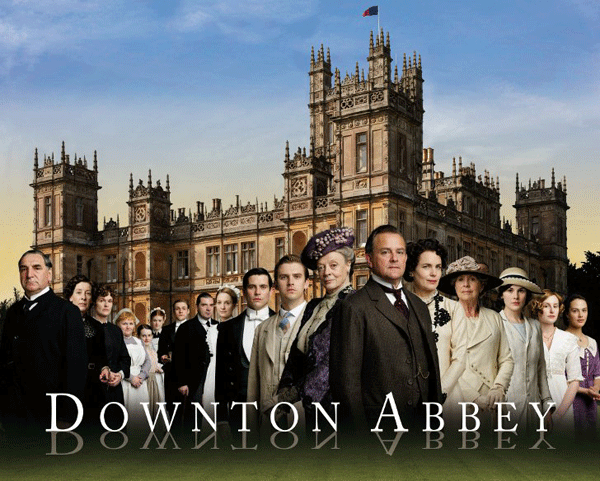
    The cast of the ITV Sunday night costume drama series Downton Abbey, outside the stately home

    1.  The Writing Will Be Better.  Julian Fellowes is a terrific writer and his historical knowledge and nuanced eye make Downton Abbey a brilliant evocation of an Edwardian life of privilege.  And, as absolutely everything improves with practice and revision, the writing will be even better in the second series:  The first time he wrote Gosford Park, it was Gosford Park, which was quite good.  The second time he wrote Gosford Park, it was Downton Abbey, which was very good, and the third time he writes Gosford Park, it will be Downton Abbey: Series 2, which will surely be amazing.  If they commission a few more series, Downton Abbey will eventually become the best written thing in the history of television.

    2.  The Opening. The first series of Downton Abbey opened with the news of the sinking of the Titanic reaching the house.  Having the heirs to the house die in the Titanic tragedy was a terrific device which acted as the catalyst for many of the storylines.  Series two can repeat this by killing off the current heir to Downton Abbey in the sinking of the Lusitania, and then we can begin the search for an heir all over again.  Only this time we might get one with a chin and a personality.

    3.  The Limp.  One of the dominant storylines of series one has been Bates’ limp.  The consternation that it has caused has resonated throughout the series with many repercussions for both the house’s residents and staff.  The First World War setting of season two will offer far greater scope for the characters to be intolerant of the disabled causing, as it surely will, characters to maim themselves fighting the Bosch from a trench.  Perhaps a new downstairs hierarchy will develop based on the amount of available limbs a servant has.  It’s like taking the limp storyline and escalating it.

    4.  Maggie Smith. Redoubtable battleaxe, the Dowager Countess, stole the show when she enquired over dinner, “The weekend?  What is a weekend?”.  The war will provide far greater scope for lofty and disdainful incomprehension, bringing as it will, a whole new vocabulary of dreadnoughts, zeppelins, trench foot, doughboys, big berthas, whizz-bangs and Kaisers.  Though she probably already knows who the Kaiser is, “Rum fellow, typical foreign-type, no notion of how to dress for luncheon and abominable taste in hats.”  The moment she exclaims, “A zeppelin has bombed Hull?  What is this Hull of which you speak?” will be priceless.

    5.  Conscription. There’ll be great scope for new and interesting characters because of conscription.  And, while the third reserve under-butler’s valet’s second footman is away having his head blown off at the Somme, who knows what could happen back at Gosfor Downton Abbey.  Any manner of earth-shattering things could occur.  Women may have to take on some of the tasks usually performed by the menfolk.  The scope for revolutionary gender-role reassignment is immense.  Perhaps they’ll find themselves selecting cufflinks, removing lint from a man’s jacket or winding up a clock.  A maid might open the front door!  Anarchy.

    6.  Order. The version of pastoral care the paternal Earl metes out to his wards will be tested to the limit in series two, as the poverty and lack of privation that war brings begins to impinge on life at Downton.  How will he dispense justice when the newly widowed ladies-maid’s kitchen-maid’s undermaid is caught pilfering part of a silver cruet set?  How will he deal with the theft of three of his grouse by a hungry poacher named Higgins (all poachers are called Higgins, I don’t know why).  How will he react to the wooing of a ladies maid by an itinerant muffin man?  It’s going to be great.

    7.  Suitors.  Once she’s been forbidden to go into nursing by the Dowager Countess, (“Nursing?  A lady tending commoners?  The moon will surely implode,”)  the eldest daughter will continue her Downton life pretty much unaltered, except with more varied suitors.  Instead of being wooed by a succession of avaricious dullards in black tie, she’ll be wooed by a succession of avaricious dullards dressed in khaki.  And that will wholly justify paying the licence fee for a colour television.  We can’t wait.