7 Reasons

Tag: BRITAIN

  • 7 Reasons To Celebrate The 50th Anniversary Of Yuri Gagarin’s Flight Into Space

    7 Reasons To Celebrate The 50th Anniversary Of Yuri Gagarin’s Flight Into Space

    On 12th April 1961, Yuri Gagarin became the first man in space. To celebrate his achievement there are a variety of events happening all over the world, but here at 7 Reasons we thought we’d give him our own homage.

    7 Reasons To Celebrate The 50th Anniversary Of Yuri Gagarin's Flight Into Space

    1.  You’re Hired! Way before Mark Burnett invented The Apprentice, Sergei Korolev invented the The Spaceman. It wasn’t actually called that, but it should have been. The premise of The Spaceman was simple, find the world’s first spaceman. After weeks of tasks – that may or may not have included filming an advert for a brand of CCCP cereal – the final came down to a battle between Yuri Gagarin and Gherman Titov. Right up until the last minute it looked liked Titov was going to get the nod. Then Korolev found out Titov was the son of a teacher and Gagarin was the son of a peasant. The decision was made. One wonders why he didn’t read the applications properly at the beginning. He could have saved a lot of bother.

    2.  Infinity And Beyond! Due to the length of time The Spaceman would have to spend alone in his shuttle, part of the training process included long stays in an isolation chamber. When each cosmonaut left the chamber they were asked what they did. Titov recited poetry, Popovich sang Ukraniane folk songs, the rest thought about their past. It was only Gagarin who thought of the future. Korolev liked this. He wanted a man who thought he would come back. (Do bear in mind that this was a good few years before the introduction of iPhones and Angry Birds).

    3.  Clothing. Look what he’s wearing! Just look! Yuri Gagarin went around the earth in a thin orange jump suit! I wear more protective clothing when I use the hob.

    4.  Humour. Throughout his flight, Gagarin referred to Korolev as ‘Dawn’. What a brilliant way of getting back at the guy who has made you risk your life. In every single transcript of the flight it’s full of Gagarin talking to this mystery character called Dawn. In fairness to Korolev he played along. To be honest, I think they were flirting by the end.

    5.  Polite. Can you imagine John Terry walking into a press conference and giving the journalists a standing ovation? I doubt it. But that’s exactly what Gagarin did when he attended a British press conference in July 1961. He also brought them flowers. What a nice chap.

    6.  The Spacewoman. Seeing his new found popularity as an opportunity, Gagarin began his own search to find a woman to send into space. As you can see, there were plenty of candidates. Personally I’d have gone for the woman in the top right hand corner. She looks like she could do with some G-forces.*

    7 Reasons To Celebrate the 50th Anniversary Of Yuri Gagarin's Flight Into Space

    7.  Serious. At 7 Reasons we don’t like doing serious very often. Serious isn’t funny. Just for today though, I am. I urge you to watch some of the videos here, spend 100 minutes watching this and following as-live coverage of the flight on twitter. It’s all fascinating. Really, really fascinating.**

    *This reason may or may not be true.

    **I’ve spent so long writing this that Gagarin’s already parachuting into a Russian field. Sorry about that. Worth playing catch up though.

  • 7 Reasons This Is Clearly Not A UFO

    7 Reasons This Is Clearly Not A UFO

    In the past two weeks Friday has been dedicated to writing about the Cricket World Cup. However, because we wrote about it yesterday – or at least about a dream – we are giving it a miss today. While many of our readers will be disappointed to read this, I ask you to think of our dedicated Polish reader who has no doubt been quite confused as of late. So, instead of cricket, we are going to write about UFOs. A subject that will be close to many people’s hearts if they read last Saturday’s guest post. You may well have heard that yesterday the MOD released 8,500 pages of previously classified information surrounding UFO sightings. Having stayed up all night to read through them I can safely say that some people in this country are officially bonkers. One depiction of a UFO that particularly caught my attention was this one:


    Here are seven reasons that this is not a UFO (and instead probably an entry to some Blue Peter competition) :

    1.  Label. The first giveaway is the label ‘normal corn crop’. May I ask, what other kind is there? An un-normal corn crop? A typical example of someone thinking too much. #Fail

    2.  Arrows. Let’s be honest, we don’t really need arrows to tell us which way up this should go? #Fail

    3.  Saucer. In some respects this is the biggest giveaway. As a rule, if you are drawing a picture of a flying saucer, the last thing you should do is draw around a normal saucer. And that is exactly what this person has done. They’ve got a saucer, turned it upside down and with a pencil drawn around it. #Fail

    4.  Design Features (i). Whenever you are making something up, you’ll generally take something you have seen or heard before and edit it slightly for your purpose. Now, I have never watched South Park, and I am suspecting the person who drew this hadn’t either. Somewhere along the line though we will have seen the character, Kenny. Which is why the weird looking yellow things on the top half of theUFO look just like him. Here’s the proof.

    5.  Design Features (ii). If in doubt, add a few windows. #Fail.

    6.  Design Flaws. The electric fans (possibly doubling up as propellers) on the side of the craft are different sizes. If you look closely you can see that the one on the right is slightly bigger than the one on the left. As a result, if this thing took off – an absurd thought I admit, it would start going round in circles. So not only would it not go anywhere, the alien inside would get dizzy. #Fail

    7.  Huh? I have absolutely no idea what this is supposed to be. The Sun? Mars? A tennis ball? An alien? Another UFO?


  • 7 Reasons To Act Like A Lion (Today)

    7 Reasons To Act Like A Lion (Today)

    I doubt it has escaped your notice, but if it has, let me be the first to tell you that it is now March. Well done us. We made it. And to celebrate I feel it would be appropriate to adhere to the idiom that states, ‘March comes in like a lion and goes out like a lamb’. Or at least the first part of it. I think we can all agree that it would be impractical to go out like a lamb before one has even attempted to come in like a lion. So today, and only today (and all subsequent March 1sts) I urge you to act like a lion. Here’s why:

    1.  Roaring. Everyone has times when they just want to roar in the face of someone. We have held back though because it is not correct etiquette. But what if you were acting like a lion? When a lion gets annoyed he roars or eats you. I have consulted the 7 Reasons lawyers and apparently we could find ourselves in trouble if we advocate – even humorously – Hannibal-style activity. Roaring is fine though. So this is your excuse. If there is someone out there who annoys you, walk up to them quietly and then roar in their face. It doesn’t even matter if you spray a little saliva. That is what lions do.

    2.  No Cooking Required. Lions eat raw meat. I need not explain this further.

    3.  Hair. No doubt someone will comment on this post in the many months to come and tell me that I haven’t done my research and in fact lions take great pride in their appearance. Until that eventuality occurs however, I will categorically state that lions are not in the least bit vein. They are quite happy to let their hair grow long and wild. So today, you don’t need to use that comb. Or that razor. Or that waxing strip. Just let it all hang out.

    4.  Sponsorship. If you don’t tell anyone the reason you are acting like a lion – and they haven’t read this post (a very strong possibility) – you could be in the money. If I see someone wandering around the office acting like a lion, I immediately assume they are doing it for charity. In theory this should probably be my second thought after, ‘what the bloody hell is that person doing in my lounge?’, but anyway, we’ll ignore that. So, if someone offers you 50p, don’t refuse and tell them about 7 Reasons, just take it. I reckon you could earn £20 just by roaring every half hour. Easy money.*

    5.  Economy. I know this is a regular theme in my posts, but it is a serious matter. We must find a way to stimulate the economy. Given that none of you assisted Marc and I in our bid to trick or treat our way out of the recession last year, I can only hope you will finally see sense and help us ‘lion’ our way out of the mess we currently find ourselves in. It’s a novel approach I admit, but desperate times call for innovative thinking. Hire a lion outfit for the day. It’ll only cost you £12 and more than likely keep you warm and snug for a full twenty-four hours. The fancy-dress market will receive a massive boost of £372,000,000 overnight which they can use to increase costume manufacture. Increased costume manufacture means more jobs. More jobs means more people with disposable income. More disposable income means more fancy dress outfit hires. It’s a beautiful circle. So let’s do this. Go to your local fancy-dress shop and hire that outfit. For the love of Britain, please.

    6.  Wales. Today is St. David’s Day in the Principality and what better way to celebrate than by acting like a lion, an animal that features on both the Royal Coat of Arms of England and Scotland? Exactly

    7.  In The Jungle Flash Mob. I’m not a fan of flash mobs especially when I get stuck in the middle of them in Trafalgar Square and end up singing along to Hey Jude, but I do feel a mass flash mob where we are all dressed as lions and perform In The Jungle could be particularly good for the soul. Something like this. Without the animated Hippo and Dog obviously. Or maybe with. TBC.

    Make sure you come back on March 31st to read, ’7 Reasons To Act Like A Lamb’.

    *Just a friendly reminder that our cut is 15%.


  • 7 Reasons That Britain Should Ban Farting.  Now!

    7 Reasons That Britain Should Ban Farting. Now!

    Malawi is currently blazing a trail in the important field of social hygiene and public decorum.  Recently, as I’m sure you’re aware, Malawi’s Justice Minister, George Chaponda, recently proffered legislation that would outlaw farting in public there.  This is a brilliant proposition, and at 7 Reasons, we firmly believe that Britain should follow Malawi’s inspired lead and adopt this groundbreaking legislation as our own.  Here’s why.
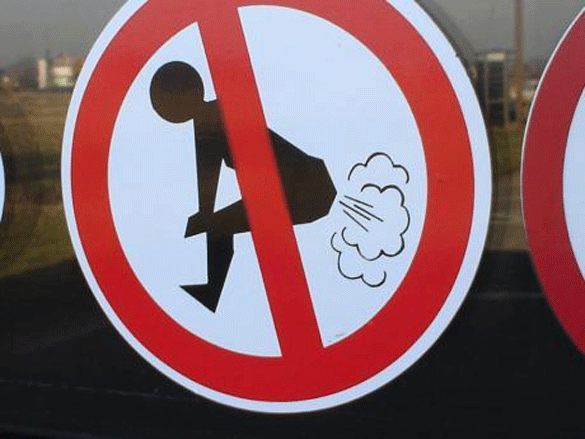
    A no farting road sign

    1.  Job Creation.  The world is in the grip of the worst economic crisis since the Great Depression and unemployment in the UK is rising.  If we were to outlaw public flatulence, however, we would need additional police officers to enforce the new anti-guffing laws.  These new officers would be paid for by funds from a central pot, entirely raised by the levying of anti-arse-methane fines which, in a country where chicken tikka massala is the most popular dish, and mushy peas and cauliflower cheese are also commonly consumed foods would surely be substantial.  It would also be a more efficacious use of police resources too as, currently, since the relaxing of the minimum height requirement, short policemen and women have been burdened with the task of tackling hardened criminals who tower over them.  With the new legislation, however, undersized officers would be more usefully redeployed into the anti-farting branch, where they would be far more effective at flatulence-detection than full-sized officers, who could concentrate on tackling more serious crime.  The sort of stuff that occurs around head-height, rather than lower down.

    2.  Because It’s Disgusting.  The most obvious reason to ban farting in public is that it’s disgusting.  No one wants the air they breathe to be sullied by it having been filtered through the fetid innards of a grubby gentleman who has seems to have been dining on Fray Bentos pies and pickled eggs for the previous – constipated – week, and with the farting ban, we won’t have to.  This fat man can be summarily hauled away by the diddy-police to the fug house rather than being allowed to continue his journey between Kings Cross and York, which is where I encountered him six months ago.*

    3.  Inequality.  Never mind the disputed existence of a glass ceiling in the UK’s wage structure or of gender disparity and ageism in broadcasting, the definitive and most obvious form of sexual inequality in the UK today is apparent in public flatulence.  After all, if a man strikes-up an impromptu butt-trombone solo in public it’s seen as ill-mannered, though somewhat comical and not entirely unacceptable.  If women break wind in public, however (even pregnant ones, for whom bowel control is more difficult than anyone) it is not seen as remotely acceptable.  When a woman lets rip in a public place, monocles pop out of gentlemens’ faces, other ladies gasp and faint, children gape open-mouthed (unwisely) and point: “That lady blew off!” they gasp in astonishment as their parents simultaneously attempt to hush them and shuffle them away from the foul and wretched harridan with the trumping problem.  If we ban farting in public, we’ll all have to hold it in and we’ll put an end to this heinous and iniquitous societal inconsistency.

    4.  Male Grooming.  The overall appearance of the British male will be greatly improved as a result of the ban on flatulence.  After all, when forced to hold it in while in public environs, he will have to resort – like his countrywomen – to more frequent visits to the bathroom to relax and unwind**.  He won’t team up with someone else to visit the bathroom because that’s just weird.  But he will see mirrors that much more often and will consequently adjust his hair more, notice dry patches, take note of errant eyebrows and, as he’ll be exposed to more bathrooms than before, he’ll see how the colour of his clothing works in conjunction with a wider variety of hues.  The nation will smell better and look better.

    5.  Control.  It’s not just that the entire population of Britain will have to control themselves better (sort of a rectal version of the stiff upper lip that made Britain great), we’ll lessen the occurrence of truly abhorrent instances brought about by a disastrous happenstance involving flatulence and intoxication.  Because I was in a busy – and quite respectable – pub once with a group of friends when a man at the next table, who had been imbibing copiously and was now somewhat inebriated, misjudged his attempt at a flatulent emission.  Within half a minute or so it became apparent to the entire pub (except, bizarrely, the man himself and the people at his table) what had occurred and, within a minute many people (including myself) were dry-heaving and within two, most of us were on our way to another pub, tears streaming from our eyes.  If flatulence were illegal, this sort of thing wouldn’t happen.  That was eight years ago, and I haven’t been back to that pub since.  This means that premises that clearly enforce the ban will benefit too, so it’ll further benefit the economy by rewarding well-run businesses.

    6.  Television.  Britain and its society was built on snobbery and the class divide and, with this in mind, the ban on flatulence will be a perfect addition to the nation’s laws.  Now, having seemingly exhausted the Drunken UK Seaside Towns Shellsuited Fighting genre, ITVs 4,5,6,7,8 and 9 and Sky: Whatever will be able to unleash a new wave of prurient “reality” programmes focussing on what common people get up to while the rest of us are safely at home cleaning our Agas and polishing our brogues.  We won’t have to watch grainy CCTV footage of men in short sleeved shirts and shoes that resemble Cornish pasties – or orange women wearing earrings larger than their frocks – fighting at 3am in Blackpool on our televisions any more.  We’ll be able to watch them farting.  This will reinvigorate a whole tired television genre while retaining its appeal to our own innate snobbery, so the ban will have the effect of enriching the cultural life of the nation while dovetailing perfectly with the national characteristic of sneering at the hoi-polloi.

    7.  Anarchy. Another of the cornerstones of the British character is that we’re taught that laws are for the obeyance of fools and the guidance of wise men.  It’s in our heritage to subvert authority and express our individualism by flagrantly flouting the law.  So some people will rail against state oppression by freely indulging their bodily urges as a means of protest.  These anarchists will fart for freedom; they’ll be freedom farters, gallantly and nobly resisting government by liberally cutting the cheese whenever the fancy takes them.  We might not all approve of their actions, but it’ll be a hell of a lot safer than petrol-bombing buildings or throwing bricks at police-horses.  And the “Fart For Freedom” posters will be hilarious.  In fact, this movement will probably be called the FFF and will doubtless become noted for being insubstantial and puffed up with hot air.*** But don’t worry, they’ll be quite harmless.

    *I NEVER forget.

    **I can’t begin to tell you how proud I am of that.

    ***FFF

  • 7 Reasons the Anglo-Franco Defence Agreement is a Good Idea

    7 Reasons the Anglo-Franco Defence Agreement is a Good Idea

    Yesterday, at 7 Reasons (.org) we ran a post entitled 7 Reasons The Anglo-Franco Defence Agreement Is A Bad Idea.  I discovered that we had done so while I was eating my breakfast, and it’s fair to say that I was quite stunned.  In fact I, the Jacques Tati obsessed, Voltaire-reading, coffee-guzzling half of the 7 Reasons team (the one with the French name), almost choked on my croissant.  “A bad idea?!” I exclaimed in a voice so high that it was only audible to very small dogs, “but it’s a brilliant idea!”  And it is.  Here are seven reasons why:

    The iconic WWII Keep Calm and Carry On propaganda poster amended to read Keep Calm et Poursuivre in honour of the Anglo-Franco defence agreement

    1. History.  The most notable occasion on which we’ve had a defence agreement and a joint expeditionary force with France was the Second World War.  And, as I’m sure you’re aware, we won that.  Obviously it didn’t work out too well for France, what with Germany annihilating the French army and occupying most of their country, and Britain blowing up the French navy before going home to dine on powdered egg with the Americans.  But we did win, so defence agreements with France are a proven success.  And now that we have the Channel Tunnel, their government will be able to flee to London so much more quickly than last time.  If that’s possible.

    2.  Cuisine.  Working together will rid both nations of antiquated ideas about the other nation’s diet.  They will come to realise that there’s more to British cuisine than roast beef – because we’ve had branches of McDonalds since at least the 1970s – and we will come to realise that there’s more to French cuisine than frogs legs.  They’ll introduce us to soufflé: An insignificant, over-inflated tart that shrinks at the merest hint of a knife, and Quiche Lorraine:  A dish that they readily share with Germans – usually as a starter – which is often followed by a generous helping of their speciality, crêpe à la guerre.

    3.  WisdomKeep your friends close, and your enemies closer:  A line from The Godfather – often wrongly attributed to Sun Tzu – that’s a very wise strategy indeed.  And who is the enemy in this case?  Well, it’s France: The nation we’ve spent more time at war with than any other.  They are l’ennemi traditionnel, and by being on board the same ships with them we’ll be able to keep a very close eye on them.  Also, should a war break out between the nations, civilian casualties will be minimised as the theatre of war will be far smaller than usual; sometimes it will even be confined to the same engine room or bridge.  And remember, should the enemy sink one of our aircraft carriers, they will bear half the cost.

    4.  Finance.  Even if you’re not au fait with the minutiae of military funding it’s bleeding obvious that we’re going to save lots of money by sharing spending with France.  Look at paint.  All armed forces need lots of paint and, by getting together we’ll have greater purchasing power when it comes to procuring it.  We’ll make substantial savings on grey paint for navy use, and camouflage paint for army use.  And we’ll make even bigger savings on red, white and blue paint as we’ll need bloody loads of that now that we’ll need to paint a French flag on one side of things and a British flag on the other.  The savings will be enormous.  Énorme.

    5.  Efficacy.  The measure by which all branches of the armed services are judged is their strike-capability.  And by entering into an agreement with the French, we’ll increase the strike-capability of our military substantially.  In fact, with the French on board, our strike capability will be the highest of any force in the world; our strike-capability will be infinity, which is greater even than the combined forces of China, North Korea, Iran, Christmas Island, Easter Island, Chuck Norris and Malta.

    6.  Co-operation.  When Britain and France work together, the two nations have been able to affect profound and lasting positive sociological change.  The channel tunnel, for example, which was first proposed in 1802 and was completed a mere 192 years later, allowed refugees of many nationalities to complete the final leg of their epic journeys of migration; fleeing hardship and squalor from across the four corners of Northern France, to civilisation in Southern England; where they were able to escape the tyranny of boules, cycling and listening to Johnny Hallyday and were introduced to the more civilised British pastimes of cricket, morris dancing, and the Daily-Mail-witch-hunt.

    7.  Culture.  Our nations have much to learn from each other and the accord will doubtless be a civilising influence.  As we get to know each other as individuals there will be a significant breakdown of prejudice and an increase in cultural exchange.  We will teach the French to drink copious quantities of beer and fight with bald men in shirts at the weekend, and they will teach the British to drink copious quantities of wine and run from bald men in shirts at le weekend. We will teach the French to make popular music that will be cherished the world over, and they will teach the British how to sneer at the X-Factor.  We will teach them that France is the ideal holiday destination, and they will teach us that France is the ideal holiday destination.  It’s a match made in heaven. The Anglo-French defence agreement is going to be great.

  • 7 Reasons The Anglo-Franco Defence Agreement Is A Bad Idea

    7 Reasons The Anglo-Franco Defence Agreement Is A Bad Idea

    7 Reasons The Anglo-Franco Defence Agreement Is A Bad Idea
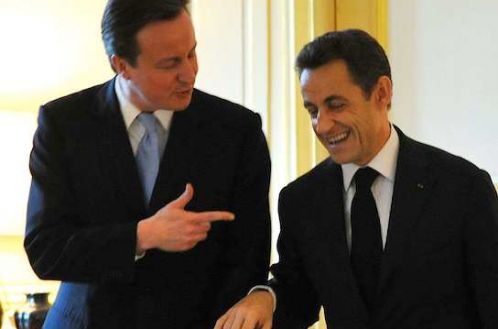
    Cameron: "Don't worry, your troops will be fine. From a distance it looks like a gun."

    Once again the power of 7 Reasons is dictating how the world operates. Today, you will hear that Britain and France have agreed to join forces in the pursuit of defending our shores. A reliable source informs us that our piece entitled 7 Reasons To Invade France caused shock-waves in both British and French camps. David Cameron doesn’t want a diplomatic incident on his hands and the French are just scared. As a result they have agreed to stand together and deny the 7 Reasons dream. But what to them sounds like a good idea given the current economic climate, to us sounds like a catastrophe waiting to happen. Here’s why:

    1.  Conflicts. For this agreement to work, both Britain and France need to be reading off the same hymn sheet. Or invasion plan. But what happens if one country doesn’t like the others proposed deployment? Well, basically, they can veto it. Rather disastrously this is going to make it extremely difficult for Britain to invade France. And who wants to live without that prospect on the horizon? Well, the French probably, but who else? Life just got a little more boring.

    2.  Kitchen Wars. This agreement will mean both British and French troops will be stationed on aircraft carriers together. An Englishman and a Frenchman on an aircraft carrier at the same time? All we need is an Irishman and we have the makings of a joke. But, sadly, this isn’t a joke. This is a very serious matter. Who will win? A traditional English Breakfast with cup of tea or a Continental Breakfast with coffee. Even the thought makes me quite queer. And what happens if Pierre – I imagine all French chefs to be called Pierre. Or Jean-Paul. But this one’s a Pierre – what happens if Pierre is left in the kitchen alone for five minutes. He’s going to spike everything with garlic.*

    3.  Left or Driot? Anyone who has been to France will know that they drive on the wrong side of the road. How they sleep at night is a mystery. But that is something we will cover in a future 7 Reasons piece. Because today we need to point out the dangers this will cause. On aircraft carriers. With the British wishing to land their aircraft on the correct side of the carrier and the French wishing to land theirs on the wrong, there is going to be more than an argument. There is going to be a pile-up.*

    4.  Cricket. With the invasion of France looking less likely, there is going to be much more free time. Time when the troops of the two nations can bond. And what better way to bond than over a fierce game of cricket? Well, actually, every other way is better. Because the English are going to be playing proper cricket and the French are going to be playing nancy boys cricket. Or French cricket as they call it. It’s going to be like bodyline. Just with more blood and clueless Frenchmen. And this, despite what I may feel in my heart, is not a good thing.

    5.  Infestation. Have you ever considered the possibility that we don’t have enough frogs and snails in Britain? No? Well give it about six months and you’ll be wondering how the hell we’ve got so many frogs and snails in this country? Unless, you’ve read this. In which case you’ll know. As soon as that French aircraft carrier docks in Southampton, we’re going to get infested with the pests. And the frogs. And the snails.

    6.  Strikes. Who knows who we are going to have to defend ourselves against in the future, but for arguments sake, let’s suggest it’s Christmas Island. What happens if Davide and Nicolas send one of our aircraft carriers over there only for the French to go on strike? And let’s face it, this is a very real danger. The British boys will be stretched beyond belief. And, as good as they are, I am not sure they will be able to survive under the constant barrage of Christmas Tree missiles. The sheer number of pine needles will sink us.*

    7.   Time-Zones. This is something I doubt either Davo or Nico have considered. Return to that picture in your mind of the Anglo-Franco aircraft carrier coming under the fire of Christmas Trees if you will. The good news is that the French have ended their strike and are now sweeping pine needles off the deck. Then the order comes through that the joint force is to invade the Island at 0700. So they wait. And then at 0700 the French troops invade. And the British wonder what the hell they are doing? Because it’s only 0600.*

    *These reasons are the property of Claire Quinn and have kindly been loaned out to 7 Reasons for the day. We are truly grateful. As otherwise 50% of the 7 Reasons team would have been here all day.

  • 7 Reasons That The Westbourne Bank Protest Was Stupid

    7 Reasons That The Westbourne Bank Protest Was Stupid

    In Britain, it’s often said that we’re not very good at protesting, and we’re always compared unfavourably with the French in that regard.  But now, public protest in the UK has reached an all-time low because, last weekend, several men in Dorset bricked up the door of their local bank in what they claimed was a, “…protest against the reluctance of banks to lend money to small firms”.  Here are seven reasons that their protest was stupid.

    Barclays bank in Westbourne, Dorset, being bricked in by protesters (Cameron Hope)

    1.  They Went To The Wrong Bank.  The protesters wanted to brick up the door of the Westbourne branch of Natwest Bank because it had refused the group’s ringleader, Cameron Hope, a business loan.  But, when they arrived at the Natwest, the police were nearby, so the group decided to brick up the door of a different bank instead.  Barclays.  Now, if I do something that irritates my wife involving…ooh…I don’t know…umm…a bicycle, for example, and I’m not there when she finds out about it – or I’m standing near the police – I wouldn’t expect her to go and yell at a different man.  Because that would be crazy.  And irrational.  And yes, it would be much better if she did that, but that’s not the point.  Bricking up the door of a bank that they didn’t have a legitimate grievance with is just mad.  And counter-productive.

    2.  Prudence.  Okay, so the bank turned down Cameron Hope’s loan application.  What should he do?  Scrimp and save, perhaps.  Look at alternate ways of raising capital, or go to a different bank.  I’m not a businessman, but I wouldn’t choose to demonstrate my financial acumen and creditworthiness to another bank by frittering my money away on costly building materials and then use them to construct a monument to my own profligacy on their doorstep.  Because that’s not going to help.  And it’s a lot of effort.  He could have achieved the same effect by setting fire to twenty pound notes in front of the bank manager instead.  Far less trouble.

    3.  Put Simply.  The more money the bank has, the more they’ll lend, making it more likely that you’ll get a loan.  Conversely:  The less money the bank has, the less they’ll lend, making it less likely that you’ll get a loan.  So if you brick the door of the bank up, customers can’t take their money to the bank, and then the bank can’t lend it to you.  I realise that this is a highly simplistic, microeconomic description of banking, but I’m addressing it thus, to the protesters because of…

    4.  The Quote.  The quote tells us that the protesters don’t understand how banking works at all, because one of the group stated to journalists, “You go into a bank and there’s nothing there, the bank’s open but the safe is shut.” This is his summary of his grievance with the banking system; and it doesn’t really bear much scrutiny.  Because of course there’s nothing there.  What does this man expect to find in a bank?  Displays of money?  Shelf upon shelf of alluringly-arrayed notes and enticing floor-displays brimming over with a boundless abundance of shimmering coins?  And of course the safe is shut.  It’s a safe.  That’s its job.  If the bloody things weren’t meant to be shut they’d be called something different.  They’d be called unsafes.  Or vulnerables.

    5.  Helping The Bank.  The protesters bricked up the door of the bank on a Sunday:  A day when all banks are closed.  So this had no effect on the bank’s ability to trade.  In fact, one of the major obsessions and expenses of any bank is security, and by bricking up the door – and thereby making it more difficult for robbers to enter the premises – the protesters actually helped the bank.  Not to mention that their protest also brought the police along to stand outside in hi-vis jackets, which probably made the bank as safe as it’s ever been.  And all at no extra cost to the bank.  What are the protesters going to do next, try to bring down the Conservative party by voting for them?

    6.  Consequences.  Though the protest didn’t have any serious consequences, it could well have done.  The protesters could have endangered the nation’s economy.  By bricking up the door of the bank, they made it likely that employees would have to enter and exit the premises via the windows.  And, as history teaches us, bankers jumping out of windows is one of the worst economic indicators that there is.  Worse even than Alistair Darling’s eyebrows.  It’s the sort of thing that, if the media get hold of the footage, can shatter fragile economic confidence.

    7.  Achievement. As a protest against banking it doesn’t appear to have accomplished anything.  I was in the centre of a city yesterday, and banking appeared to be going on pretty much unhindered by the protest. People in polyester uniforms were sitting around near potted plants in waist-high partitioned areas looking depressed, as usual.  The cash machine outside was covered in the remnants of a McDonald’s milkshake, as usual.  I wanted to thump over 90% of the people in the queue, as usual; even myself.  So the protest has had no discernible effect on banking.  Obviously, the protest brought an awful lot of free publicity for the property developer behind it, but that wasn’t the point.  Because this was a protest against banking, right?  And not some sort of tawdry self-serving publicity stunt?

  • 7 Reasons The Sinclair C5 Was Destined To Fail

    7 Reasons The Sinclair C5 Was Destined To Fail

    The Sinclair C5 was relentlessly ridiculed. And quite rightly so, it was rubbish. Any Industrial Design & Technology graduate/person will tell you that. But if they had just made a few small changes, it could have sold at least 500 more units.

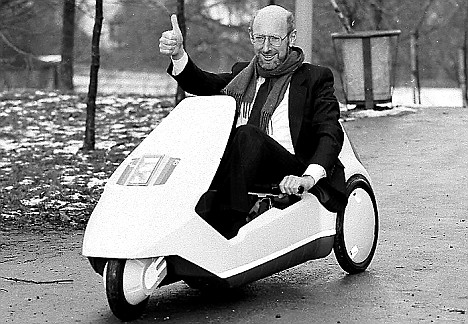
    Sinclair C5

    1.  Women. Quite why Sir Clive Sinclair thought his bucket-on-wheels was going to appeal to a market that needs to check make-up upon arrival at destination, is anyone’s guess. But he did. And he was wrong. If only he had doubled one of the wheels up as a mirror. Sure, it may have looked a bit ‘bling’, but it would probably have appealed to the ever growing pimping community.

    2.  Date. Unfortunately for Sir Clive, he decided to launch the Sinclair C5 on 10th January 1985. It just so happened that the Viennese zither player, Anton Karas, passed away that day. And as we all know, a zither is much more powerful than a Sinclair C5. The 11th January 1985 was a very slow news day. If only Clive had waited 24 hours.

    3.  Hills. Always a bit annoying having to get out of your vehicle and push it up a hill isn’t it? Which is why the Sinclair C5 should have come with a tow rope. Or a map that just showed hills that went down.

    4.  Stirling Job. Getting Sir Stirling Moss to promote the Sinclair C5 may have seemed like a stroke of genius, but they really should have prepped him first. “Just treat it as if you are riding a bicycle,” probably wasn’t quite the ringing endorsement Clive was after.

    5.  Washing Machines Live Longer With Sinclair. There is an urban myth that says the Sinclair C5 was powered by a washing machine motor. It’s a myth because although the motor manufacturers, Polymotor, do supply to the washing machine industry, they also manufacture torpedo motors. Unfortunately, it is true that the body work of the Sinclair C5 was manufactured by Hoover. Clive should have waited for Dyson. Then maybe I wouldn’t be trying to think of witicisms that involve ‘Sinclair C5’ and ‘cleaning up’.

    6.  Britain. Sir Clive’s biggest mistake was probably that he tried to sell the Sinclair C5 in Britain. Not only did Britain already have things called cars, it also had weather. And sadly it was never very good. If Sir Clive had been any good at geography, he would have realised that the Sahara desert would be a much better place for his bits of plastic. If it had come with a spade too, the owners could have made sandcastles.

    7.  Elephants. There is a joke about elephants and minis that I have never really understood. It goes something like this. Q: How many elephants can you fit in a Mini? A: Four. Two in the front, two in the back. Hilarious it may not be, but it does at least make you think of four elephants. In a Mini. Now that’s a terrific endorsement for both Minis and elephant dieting tips if ever I have heard one. So now let’s try it with the Sinclair C5. Q: How many elephants can you fit in a Sinclair C5? A:

    Elephant sits on Sinclair C5

  • Guest Post: 7 Reasons Americans Call Football Soccer

    Guest Post: 7 Reasons Americans Call Football Soccer

    After a brief stopover in England last week, the sofa is back on its tour of the USA. This Saturday we have wound up in…er…we’re not sure (we forgot to bring a compass and our map seems to have been printed upside-down). Literally thousands of people raced from their homes to see what the fuss was about, but it was Breana Orland who won the place on the 7 Reasons chaise longue. And it’s a good job she did because she’s going to explain to us one of life’s mysteries. Just why do Americans call football, soccer.

    Breana Orland is a writer for Student Grants. She also gives advice on the pursuit of higher education and career options for young adults.

    David Beckham Tries Out NFL

    Leave it to the bloody yanks to bastardize the world’s sport by giving it a different name and, refusing so thoroughly to recognize its real name, that we assign it to a completely dissimilar sport. As per our usual custom, Americans have to do everything on their own terms. First we separated from England. Then we said no to the metric system (forget the liter, I need a gallon of milk!) and driving on the wrong side of the road (if we drive on the right side, then yours must be wrong). And finally, we took the most beloved sport in the world, football, and applied the name to a sport that should by all rights be called handball. And we named football, soccer. But if you ever wondered what caused Americans to raise the ire of football fans everywhere by giving it a new name, here are a few things you may want to consider.

    1.  We Already Have A Sport With That Name. Football may be THE international sport (played with feet), but here in America, football is a game that is played on Sunday by enormous men in spandex and padding that line up facing each other like they’re reenacting a pre-revolutionary battlefield. It is a sport played mainly with hands on the ball, but for some reason, we call it football.

    2.  Because Of The Soc? No, not the funny socks they wear. Apparently, soccer was a slang term derived from “soc” in the original name “associated football”, and since we gave the name football to the gridiron sport, the international sport of the same name got the short end of the soc.

    3.  We’re contrary! Deal with it! There’s a reason everyone thinks Americans are, um, jerks. We kind of are. You wanna go?!

    4.  New language Is Our Bag, Baby. Sure we inherited our national tongue from the British, but you don’t hear us running around shouting “Bollocks!” or “Pip, pip, cheerio!” In keeping our image as the kid who ran away from Mommy and Daddy, we have adopted our own accents and colloquialisms and set to making up words. If you don’t believe me, just consider the fact that “truthiness”, a fake word made popular by The Colbert Report’s Stephen Colbert, was actually added to the dictionary.

    5.  Soccer Is America’s Sport. That’s right; we jacked the world’s sport and gave it our own name. Then we stole England’s soccer legend (but Becks, wouldn’t you really rather live in Los Angeles?). Then we embarrassed them at the World Cup (okay, they embarrassed themselves). And still, it is the least recognized sport in our country. Stick that in your pipe and smoke it.

    6.  We did it our way. At least, according to Frank Sinatra. And the Chairman of the Board is never wrong. Americans always have to do things their own way, even if it means that we’re going against the entire world and firmly established facts or traditions.

    7.  We’re idiots. At least, according to the rest of the world. Apparently we just don’t get it and we never will. Maybe if you called it soccer…

  • Russian Roulette Sunday: Promoting Brown

    Russian Roulette Sunday: Promoting Brown

    The 1960s: clothes, interiors, fabrics, art – just about everything – were a riot of colour.  This wasn’t much help to the (predominantly British) manufacturers of brown dyes and paints though, which was problematic, as during that decade their production continued apace.  The result was, that by the 1970s, Britain had a huge surplus of brown colourants and needed to find a market for them to help with the balance of payments.  This led to the formation – in 1971 – of the Brown Marketing Board, a government funded organisation devoted to the task of promoting the use of the colour brown by manufacturers and consumers alike.

    While researching 1970s advertising, we came across many fine pieces of work by the Brown Marketing Board and today, we thought we’d share a few of them with you.

    1.  Swatch. A very simple poster, placed on the London Underground, on bus shelters and other street-level sites where people congregated.  It was purely placed there as a brown colour swatch, the idea being that anyone standing near it would appear uncoordinated if they weren’t dressed in brown.  Sales of brown coats to London commuters soared, thus proving that the simplest ideas are often the best.


    A brown colour swatch poster by the Brown Marketing Board

    2.  Germans Eat White Chocolate. By the 1970s, Britons had still not gotten over the war, as this poster designed to promote the consumption of brown chocolate demonstrates.

    A Brown Marketing Board poster used to promote the consumption of brown chocolate instead of white chocolate


    3.  If Only The Carpets And Curtains Matched. A poster used to encourage the use of brown in all areas of interior design.  Looking back at pictures from the 70s, it seems that this campaign must have been a success.

    A Brown Marketing Board poster from the 1970s to encourage uniformity in interior design

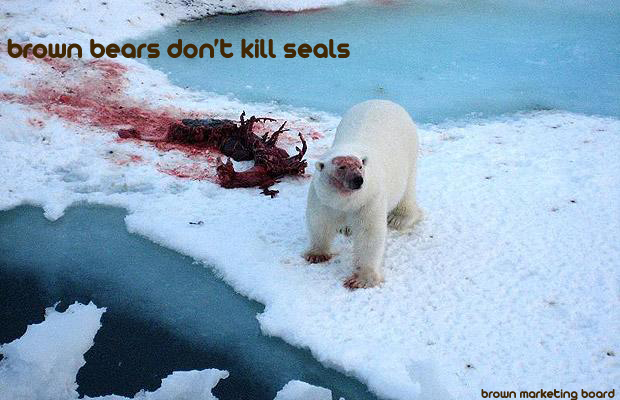
    4.  Brown Bears Don’t Kill Seals. We’re fairly certain that they weren’t encouraging people to divest themselves of their pet polar bears in favour of brown bears.  We think that this was probably just an attempt to promote brown as having generally “good” qualities.  Sales of Fox’s Glacier Mints plummeted as a result of this controversial image though, and it was soon withdrawn.

    A poster by the Brown Marketing Board featuring a bloody polar bear and a seal corpse.

    5.  Arrive In Style. What can we say?  It’s a brown Austin Allegro.  Perhaps this image contains a powerful subliminal message, because British Leyland sold loads of them.  No one knows how.  Maybe it was this advert.

    A poster advertising the Austin Allegro by the Brown Marketing Board.

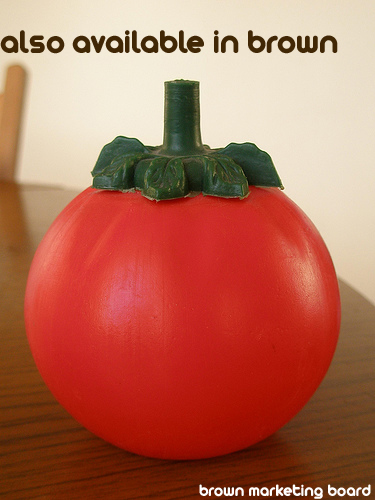
    6.  Also Available In Brown. A very clever poster designed to increase the consumption of domestic produce in two ways.  Firstly, using brown sauce instead of ketchup would help the sales of brown food dye.  Secondly, it reminds us that brown sauce is a British tradition – after all, the H.P. in H.P. Sauce stands for Houses of Parliament – so the increased use of brown sauce would directly benefit British manufacturing interests.

    A poster by the Brown Marketing Board designed to promote the use of brown sauce instead of tomato ketchup

    7.  Score In Style. Well, you wouldn’t want to win ugly, would you?

    A Brown Marketing Board poster from the 1970s featuring the infamous 1970s brown Coventry City - CCFC - away kit