7 Reasons

Tag: cow

  • 7 Reasons That Jack And The Beanstalk Is A Bad Example For Children

    7 Reasons That Jack And The Beanstalk Is A Bad Example For Children

    As a parent, I’m conscious that I have a grave and onerous responsibility to instil an inherent sense of right and wrong in my son. To make certain that, during his formative years, he is given the equipment which will eventually enable him to become a good and productive member of society. To give him good values; tolerance, a respect for others, for law and order, for property. For that reason I won’t be reading him Jack and the Beanstalk. Here are seven reasons why.

    7 Reasons That Jack And The Beanstalk Is A Bad Example For Children

    1.  Jack Is Feckless. What’s the first thing he does? He – on behalf of his mother – takes their one marketable asset (a cow) to market, but instead of selling it – as instructed – to raise much needed capital, he takes it upon himself to strike a different bargain with a shifty stranger. He swaps the cow for some magic beans. That’s magic beans. Beans that are magic. This says that not only is disobeying your parents the right thing to do, but that if a stranger offers you something highly dubious in return for a real and tangible asset that’s a perfectly good transaction to make. Essentially this encourages both charlatanism and fecklessness. And Paul McKenna.

    2.  Jack Is A Trespasser. Later in the story, he goes through a garden and breaks into a house. And it’s not just anyone’s house. It’s the house of a poor, unfortunate sufferer of the genetic condition giantism. So not only is he trespassing, he’s committing that crime against a minority. Despite being rather high up, Jack’s the lowest sort of criminal bully.

    3.  Jack Is Unapologetic. And what is the giant’s reaction to finding that someone has broken into his home? Well, perfectly understandably, he’s not best pleased. He wants to set about Jack (and he is perfectly within his rights to defend himself and his property using reasonable force). But what does Jack do? Like the weasel he is, he slinks off, with the help of the giant’s wife, no less. Jack has set one partner against the other and has breached the sacred bonds of trust between a man and his wife, and all because he’s too cowardly to face his victim.

    4.  Jack Is A Burglar. Then on his way out, Jack steals some gold coins. So it’s not mere trespass now. It’s burglary. Should we really be encouraging our children to consider burgling the homes of minorities? Is that really a good message? Wouldn’t a better message be don’t burgle the homes of minorities? Don’t, in fact, burgle anyone?

    5.  Jack Is A Serial Offender. What does Jack do after he’s returned home? Does he, in the cold light of day, come to regret his actions? Does he show remorse? Does he head to his local police station to hand himself in or return to the giant’s house to reimburse him and offer to make amends? No. He goes back to the giant’s house and burgles it again. Twice! Jack is not only a career criminal. By picking on the poor giantism sufferer again and again, he’s persecuting a minority.

    6.  Jack Is A Murderer. What does Jack do during his final burglary? He murders the giant; a man who has already had his (sadly truncated) life blighted by an unfortunate genetic condition and who has been tyrannized by a serial burglar, is killed in cold blood by Jack in a desperate attempt to cover up his many crimes. Even Ryan Giggs hasn’t resorted to murdering people yet to cover anything up. We’d all better hope that he doesn’t read Jack and the Beanstalk. The body count could be enormous.

    7.  Jack Is A Psychopath. What manner of comeuppance does Jack receive for his numerous sordid and cruel misdeeds. Prison? Capital punishment? A community service order? A lifetime subscription to OK Magazine? No. Jack gets to marry his sweetheart – the daughter of a count* – and live happily ever after, a wealthy man. Happily! He doesn’t even suffer from the slightest bit of conscience induced existential torment. There’s no regret at all, or remorse, the lack of which is one of the most marked symptoms of psychopathy.

    Is a disobedient, feckless, trespassing, uncompassionate, home-wrecking, burgling, serial-offending, bullying, bigoted, murdering psychopath really a healthy role model for our children?** Jack even gets rewarded for his appalling behaviour. I don’t think we should be telling this story to our children at all. I think we should be reading them this one.

    *Not a typo.

    **It didn’t go well for Colonel Gadaffi’s kids.
  • 7 Reasons to Replace the Horse With the Cow

    7 Reasons to Replace the Horse With the Cow

    Great news from Germany!  The horse is obsolete.  A fifteen year old girl has trained a cow to show-jump because her parents refused to buy her a horse.  At 7 Reasons, we love this sort of defiant ingenuity so, in honour of the quite brilliant Regina Meyer, here are seven reasons to replace the horse with the cow.

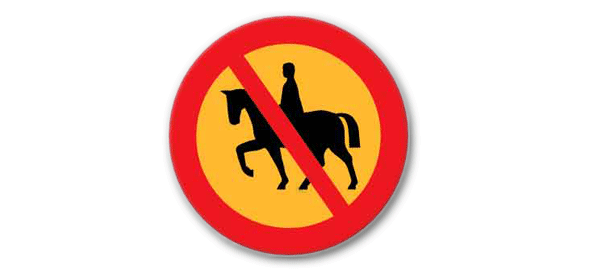
    A no horse riding road (traffic) sign

    1.  The Grand National.  Or, The Festival of Horse-Death – as it’s called in my house – with its high fences and terrifying leaps is dangerous for both riders and horses.  If we replaced the horses with cows though, imagine how much better it would be.  Would cows even attempt to hurdle over Canal Turn or Becher’s Brook?  No, of course they wouldn’t, they’d just amble round them, perhaps pausing to nibble at the racecourse (or grass, as it’s known to laymen).  There’d be no injuries to jockeys, no innocent animals would be shot and there’d be fresh milk for everyone at the finish.  Or – if the race had been ridden at a quick pace – milkshakes.  Even if cows did get injured and required shooting it would still be better.  If you shoot a horse, you get a dead horse.  If you shoot a cow, you get a nice sofa or a handbag.  Or a steak.


    2.  Food.  Strange as it may seem, there are people out there that eat horses.  They’re called The French.  But French cuisine is awful.  After all, if it was any good, French chefs would stay there and cook it, wouldn’t they?  But they don’t, they’re all over here in Britain, cooking food that doesn’t contain horses; making hors d’oeuvres rather than horse d’oeuvres.  Is France teeming with British chefs?  No.  That’s because horseless cuisine is better and they want to stay.  If France replaced the horse with the cow, their chefs wouldn’t leave in their droves.


    3.  Milk.  The phrase, “get off your horse and drink your milk”, is often attributed to John Wayne.  But if we were to follow Wayne’s suggestion, and get off our horse and drink our milk, we’d still have to find a cow because drinking horse-milk would just be weird.  And would you fancy trying to milk a horse?  I certainly wouldn’t.  So if you had a horse, you’d still need a cow.  If you rode a cow though, you’d only need one animal – your cow – and rather than getting off it to drink your milk, you could probably construct some sort of straw/hose milking-device to deliver your beverage to you in situ.  Call yourself a cowboy, John Wayne?  Too bloody right you were.


    4.  Society.  Cows aren’t horses.  They aren’t evil, terrifying, flighty and they don’t chase me round the dining room in my dreams.  The world would just be a nicer place with fewer horses.  What happens in a society where there are lots of horses?  I’ll tell you.  The streets of Edwardian Britain were riddled with the infernal beasts running amok, terrorising women in corsets and babies in perambulators just because they’d heard a backfiring omnibus or been startled by an oncoming charabang.  Would cows have reacted in such a dangerous fashion?  Nay.


    5.  The Future.  You can predict future events just by looking at animals.  If you look at a horse, you can tell that something bad will happen, and if you see a cow, you can apparently tell what the weather will be, just by whether it’s sitting-down or standing-up.  And there’s an old piece of country wisdom which goes, “pink cow at night, Angel Delight”.  Cows tell you stuff about the future and horses just give you the heebie-geebies.


    6.  India.  In India, cows are sacred and roam free and many drivers will swerve into almost anything to avoid a collision with them.  It stands to reason, therefore, that the safest place to be in India, is on a cow.  Cars and trucks would actually go out of their way to avoid you.  Brilliant.  It would be safer than riding a horse and safer even than riding an elephant.  And cows aren’t governed by speed limits, traffic lights or contraflow systems.  They can go anywhere.  Usually to moo at things.


    7.  My Family History.  My late father was a horse. Not all the time, you should understand, but occasionally.  I believe he was a horse twice during his lifetime.  Or rather, half a horse.  As a part of Manchester University’s rag week in the late 1950s, he and two friends competed in the 2:10 at Lingfield one Saturday.  He (front half of horse) and his friends (back half and jockey) hid behind one of the fences during a rare – in those days – televised meeting and waited.  When the other horses approached and jumped the fence, my father and his friends sprung from their hiding place and galloped down the course in pursuit of them.  Despite a great deal of exertion over the following couple of furlongs, they were unable to make up much ground and soon began to tire.  Their race concluded early when they were chased away by an angry policeman.  That was the highlight of my father’s sporting career.  In fact, it’s the biggest sporting accomplishment in our entire family history.  But if those horses had been cows, my dad could have won that race.  And then we could have put him out to stud.  He’d have liked that.